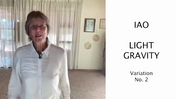
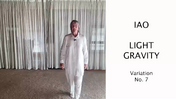
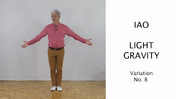
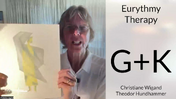
So I would like to start again with a figure.
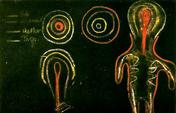
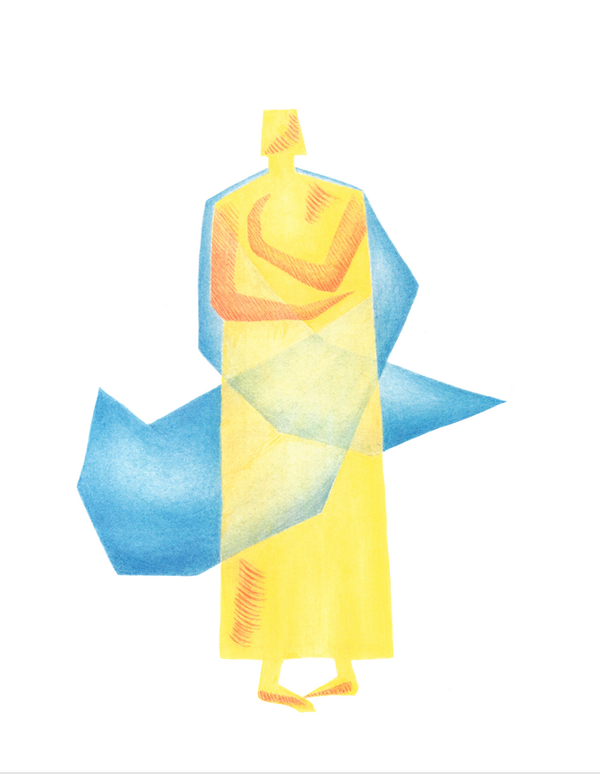
You see the figure is yellow and has a blue, nice blue veil.
The right hand side goes very much all around and has a red character.
And basically in the arms and a tiny little bit on the right hand side here at the bottom, but the feet have no red.
So that's very interesting.
So if you
want
to work with the feet, have to be in the light, so they have to really be shining.
So let's start.
Let me just walk in yellow.
So we stream out in all directions with a yellow and we can do it with hands and feet and the whole gesture, just our whole movement is yellow.
Yellow, just light.
And
yellow.
And yellow, move in all directions.
That you feel light and streaming light out in all, in every way you want to.
Now comes the blue.
So the movement is only in our uprightness and the blue calms it down.
So the blue comes from above and from the outside and calms it down.
And one more time.
And now you try that you have the red character and you try that your arms at the end really become red, like a strong resistance with the red.
So yellow,
blue, red.
After each other.
Yellow, blue, red
and one more time
yellow
blue red.
So the bee.
So now we bring this into the feet.
So now the way I've been teaching it is that we have our door closed, our door, and then we open the door on one side.
So now the knee already shows to the outside and this is where the knee stays.
So the knee stays at the outside and the rest of the foot builds a nice round cave.
So that the knee is at the outside and the feet go around.
And that you feel each and every toe like you felt your fingers.
Each and every toe you feel is going round.
So the left hand side, we open the door.
And then we go around building the cave.
And the toes go round.
And what makes it a little easier when the leg that you stand on, you also bend a little bit.
Yes, so if you stand like this, it's kind of cannot react.
If you put it like this, then you can keep your balance a little better.
So we open the right hand side,
go around and
And we open the left hand side,
go around and be.
We open the right hand side, around and be.
And we open the left hand side,
around and be.
Now if you want to work on the consciousness forces so that, for example, you want to bring somebody really down because like old people, for example, with incontinence, then it's very nice to only do it almost on the floor.
So you bring it right down and you leave it on the floor.
So that you bend this knee a little bit more.
That you really go all the way down so that it works on your incontinence.
Leave it on the floor, be.
And
And what is important that you only go up to the middle, that you don't go over the middle, so don't go over to the other side.
So now there are variations.
So now we can take the right hand with it and the arm can go all the way around, but the leg stops in the middle.
So let's try those two together.
And
b and Lovely.
Yes, and it's very good for people who have to get up in the night five times just for a few drops, that actually the bladder can carry a little bit more, and so that they maybe only go once in the night to go to the loo or something.
Yes, it's very tiring if you wake up very often for a tiny little bit of urine.
So now with children, I go into a cave so we can do it in such a way that the right foot meets the left arm.
We build a house
with music inside, all the way round, Big and round.
Yes, so that the feeling is there, they are enclosing themselves and they are coming a little bit to a close.
Many children are today a little bit nervous and all the way around.
Then it's very good to catch them a little bit.
Once more, right foot, left arm.
I build a cave.
Surround and round.
I build it all around.
I build it firm.
I build it round.
I build it firm and round.
So always make sure that your foot is outside, that your knee is always showing to the outside.
Now with children, we can do it in such a way that we have a little stool.
And so that they get this thing with the feet properly, so we open the door and then we can put it first also for their balance, also for old people.
But with old people, I wouldn't do that.
I would do it with a chair to hold on.
But with children, can do it like this, that they first put their foot on top of the stool so that they get the main movement and they can rest their foot on this chair.
I build a house for my little snail.
I build it round and round.
I build it firm, I build it round.
I build it firmly on the ground.
I build it firm and round.
And already you notice it's higher up.
And notice what it does to your your torso, to your intestines and so on.
So now we take it up without a chair.
I build a house for my little bird.
I build it round and round.
I build it firm.
I build it round.
I build it firmly on the ground.
I build it firm and round.
I build it firm and round.
And pause.
Just feel where it works differently.
How does it work when you have it on the floor pretty much down?
And how does it work when you take the foot a little bit up?
In any event, it warms this whole region.
I hope you can all feel it that this whole region gets warmed through.
And that's what we want to achieve, that the whole digestive system, the kidneys, they all feel right warmed through.
The B is especially the sound for the kidneys.
And I don't know whether you know, but the kidneys have this special suit, the special fat in which they which they are sitting.
Nowhere in the body do you have this kind of fat that holds the kidneys together.
And so the B is really the B as a sound is almost a visible kidney.
Yes, on both sides there are these two kidneys and the B is doing exactly that gesture.
And we use it for children, for example, who have ADHD or who have these eyes that are looking out with lots of tension and not always anxiety, but with a kind of an intense look.
And to calm this a little bit down, we can do now in such a way so that we have one hand over the head to bring a little bit of calmness to the nervous system.
And one arm to the middle sphere that we bring a little bit of containment there.
And then the leg that goes underneath.
And obviously you can only do that after some weeks so that they can that they have practiced this.
But let's try and do this together.
So first the left arm over the head.
The right arm in the middle section that you feel protected in your feelings.
And now the left foot comes onto it and does the B at the bottom.
And we do all three together.
B
and b
and
b
and b and and I
don't know how you are doing, but let's just do it again because it's a bit tricky, yes, with the changes of arms and legs and so on.
Let's just do that one again.
So the left arm is over the head.
The right arm is in the middle.
And the left foot goes around.
And B.
And now everything changes.
And
B.
And b
and
b
And And to make it a little stronger for these ADHD children, we can now even do a burg in our back.
So we lean a bit forward so that even our back builds this cave.
So we're doing the same thing, but the back comes into it.
So we have our right arm on top, left arm here, bending the back.
And now we do the foot also, the leg.
B.
And we change.
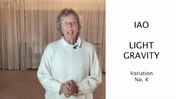
Upright yellow.
And go into the blue.
Blue.
Yellow and
blue.
Yellow and blue, and yellow and blue.
So you can imagine that there's a lot of exercise necessary for children to do that because it's quite complicated.
So you do a lot of steps in between until they get there.
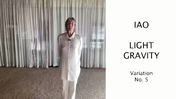
Now we take both our feet for another indication.
We take the back, the feet stay together.
We take the back into the B and both arms into the B and we go right down into our legs like this, into the cave.
And we rise out of it.
And make a little step.
And again, go deep into the cave, all blue.
Bee.
And you rise out of it slowly and do a little step and take it all the way down, deep down into this cave.
Be.
Last time.
And b.
Now check out your feet.
Are the feet becoming nice and warm?
Then you did it well.
Otherwise, we do it again.
Anyway, this exercise is against migraine.
Yes, so then people have migraines and there's the life forces.
The blood is coming too much up into this nervous system.
Then you pull it right down again into the legs, into the thighs.
Yes, and into the feet and you bring it down so that it streams out of the head and goes down where it belongs.
And it is necessary that your thighs become a little bit sore, because the thighs, the muscles of the thighs, they draw the blood down and then it goes out of the head.
So let's do it another time and see whether your feet become really, really nice and warm and hot.
B.
B.
B and b.
And breathe.
I hope your thighs are a little bit sore now.
Yes, and you can feel how the blood and the warmth goes more down.
Good.
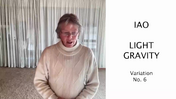
And now there's one exercise where you need to become warm feet and warm hands.
And that is to do the B with the hands and with the feet only.
So with the hands you can first maybe try and hold something as if you hold a little chick in your hand or something.
So you do a little B and then the little chick grows and you do it a little bit bigger.
And you really feel the space between your hands that it becomes warm.
And the chick becomes a little bit bigger.
And the chick becomes a really nice big hen.
And again.
And you can maybe feel how your hands and especially the fingertips, how they really become warm.
And now we do it with the feet.
Very small.
B and b and b and b and
and b and b.
Good.
So I can see, now time is almost over for the b.
So I would like you to take, I took five cards, so just take your five things that you brought along and we put it now on the floor in a little distance.
So one here, about a half a meter further, the next one, so that you have them all spaced out like this.
And now I show you a bee that you find in the water.
When you look at a river, how it moves over stones sometimes, it goes round and gathers somewhat and then it goes round, flows on and gathers around that stone and it carries on and goes round the next stone and goes round the next stone.
I show you from the side.
So forward You know what I'm talking about.
And now I'd like us to do it, it's also a bee, but a bee that enlivens, a bee that speaks to the whole lower body to enliven it.
So we start to the right hand side, we go around two cards or two items, and then we go one back.
So that's like a spiral.
Yes, two in front and one backwards.
Let's go.
Forward and a little bit back, backwards.
Now to the left hand side, around two and one backward.
Now to the right hand side, around two and one backward.
Now to the left again, around two, and backwards.
And now we go the one swoosh forward.
Now we do the same thing backwards.
Two backwards, left and one forward.
Now to the right hand side, back.
Two back and one forward.
Left hand side, two back and one in the front.
Two back and one in the front and swoosh where you came from.
Did that work for you?
I hope it worked for you.
Now we do a bear when we come to stand at the very end, just with our hands.
Right around two and one back and B.
Right and left around two, one back and B.
To the right, right around two, one back and big.
Left, right around two and back and big.
And swoosh one forward.
Now backwards, left, around two and in the front,
around two and b.
Left around two and
b.
Right around two and b.
Swoosh, we are there again.
And now just feel what this beautiful form does, the River Biak, we can call it.
A very enlivening way of doing it.
Also for children, of course also for adults, but for them who are very pale, have this grey skin and always talk very much and are really just so much in their head and have this gray skin and, you know, very weak somehow.
So that's a very nice way of doing it.
In digestion, what we do is we always want to have everything go down and out.
Right?
So we don't want anything to come back to us.
So we want it to go down through and out.
So there we move forwards at all times.
With the B, it's not about digestion so much.
It's not about elimination, you see.
With the B, it is about holding and finding the contact again to our higher self.
So there we can do it forwards, that we can collect ourselves together.
But if we do it backwards, we reconnect with our higher self and then still do the bee.
So it gives us more how can I say more power?
I don't want to use the word power, but it gives us a higher identity somehow to do this.
So the B is not a sound where you want to eliminate.
Yes, the D and the T and the Sh, it's all to eliminate and to go down and out, but not with a B.
Do you keep the heels down when you are doing the migraine B?
I think you can't physically, you see.
They have to be up a little bit.
Good.
Nice question.
Yeah.
Want to say more?
Yeah, okay.
You see there's also more tension.
If you bring the feet up, there's much more tension then.
In the feet, in your lower leg, in your thighs.
There's a lot of tension, yes?
And this is what all these muscles, they need blood.
So the blood, want to ask the blood to come down and to come out of the head.
So it will pull it down.
Yes, so I think use as much muscles as you can, you know, to get down, you know, the tension of the head down.
You can also do it with children by sitting down.
So you sit them down like this and then you do the in the front around something that's lying there in the front.
And then the other one.
Then they get it that the knee is outside and that the foot goes nice and round here and so on.
So that's an exercise for the children to start them off before they're doing it standing.
But we don't need to do that now because we need to move on to the p.
Now let's do the p.
Now it goes three times first.
P p p to the side.
And the foot looks to the outside.
So it stays horizontal the foot and it goes p p p.
To the right hand side, p p p.
And to the left hand side, p p p.
Yes, good.
And now you can feel you are in this area also with the feet, are in this will sphere of the three spheres that are around us.
So the PIP is very much in this will sphere and because it is symmetrical, it supports the ordering forces from the head.
So the head forces always order things and bring things into symmetry.
In the head everything is symmetrical, in the body it isn't.
So these forces that bring order, they come from the head and the P supports these forces.
So let's do again.
Just where the knee is about, basically along the calves and is above the ankles, yes.
And now when do we use it?
We use it for children who also have incontinence, who like they play in sports and they get so excited and carried away because they're winning or because they're losing, and then suddenly the whole trousers are wet and now it's a catastrophe on the sports field, yes, because they peed in their pants.
So now what I often do is I put them into put a chair in front of them, a little bit higher than this one.
So there's a chair.
Now they have to take their feet apart.
And now they do a P jump.
That means both soles have to clap together behind them, under them, like there.
So let's try it goes like this.
And you can help yourself with standing on your hands for a little moment.
And.
So then these children come to feel when they have to go, even in the sports match, that they still have to go run quickly to the loo, and they become more aware now it's happening.
So that's a very, very important P to know, to bring this in.
And the jump has always this faculty to bring the eye in because for a moment you are off the ground and your eye forces have to come in very quickly to come together again.
So if we now do it without a chair, it's quite difficult, obviously.
But with children it works.
Go like this.
And now the children have to do it without a chair, so it must be very fast.
And, and, and, and, So I won't do it too often with you because it's very tiring.
So I show the children one or two times and then they have to do it by themselves.
And now there are three different Ps we can do around us.
Does the child need more light from above to be pulled towards it?
Does it need to pull in more love forces from around?
Or does it need more strength from the earth pulled into it?
So you can decide whether you want to strengthen the head forces of the child, bringing the P in at the top Or you want to bring in that they feel understood from the outside P.
Or they need more strength, they are too thin and too pale and you want to bring in the strength from the ground.
And now we do it together with the jump.
So let's do it three times, once from above and once from the middle and once from the bottom.
And you can feel everything happens on the frontal plane.
Everything happens symmetrically, brings a lot of order into these children.
Any of my teachers do that, so I do that because I feel that if you want to draw in the forces from the earth, you can't really do it, you know, like this, so I draw it in like this then.
But you must have the feeling that you draw in the forces from the earth into yourself.
Yeah, but the most important thing is that you draw it in, that you draw it towards yourself.
But I mean, I think remember that what Theodore brought in the first lesson that the I, our I for our movement, for our will is in the circumference.
Our I is around us and it's only within us in the head and it is in between in the feeling, but in the will the I is around us.
And the p is actually a perfect example and of course also the t.
So that you are in the circumference and then you draw it in And you have to be in a way you pull in the light.
You have to be there obviously, otherwise it doesn't work.
Can't be here.
But you're related to your center.
So you relate it to your center, you are in the circumference.
So here's the light outside your fingers and then you pull it in.




 Virgo
Virgo