Course Content
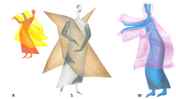
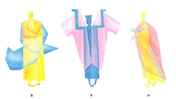
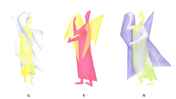
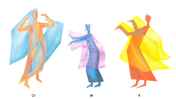
Sunday: D and T
In 1912, in his very first eurythmy lessons, Rudolf Steiner describes the consonants as a reaction to external influence in contrast to the vowels that weave within and reveal this inner being.
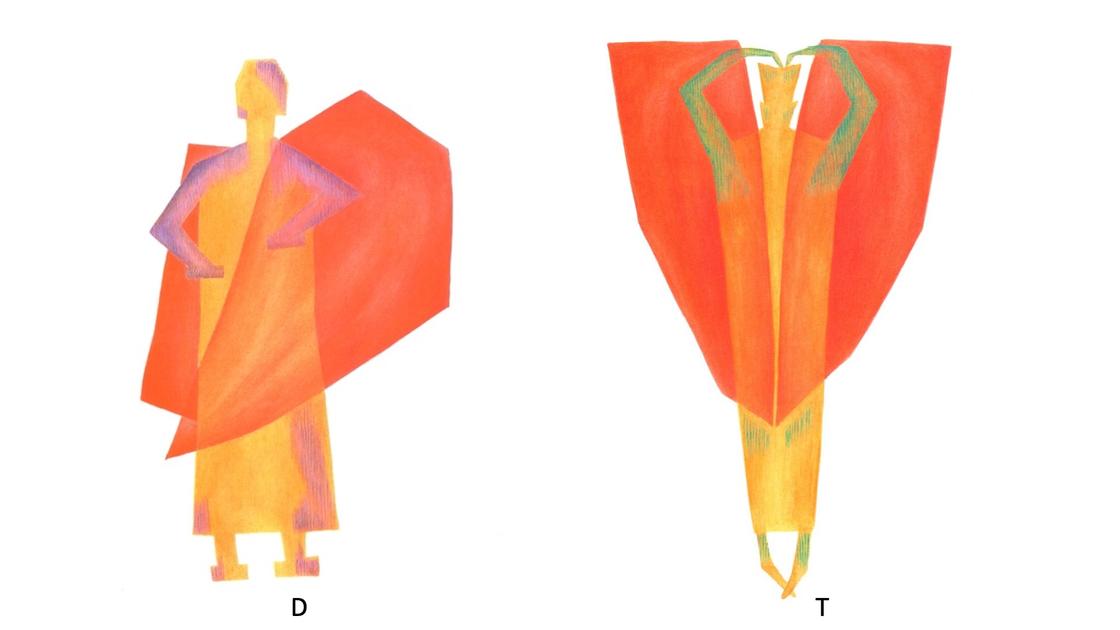
D
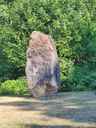
"Imagine a very beautiful, peaceful evening landscape. Not grandiose, but soft, gentle hills. In the background the sun is setting between two hills. A few white clouds stand still, motionless in the sky and look down on a lovely meadow valley. A small stream flows quietly, murmuring like a dream, trees and bushes stand on the edge of the river and are reflected in its still water, flowers bloom in the meadow, and on the slopes of the hills there are fruit trees full of ripening fruits. Perhaps there is still someone working quietly and calmly on one of the slopes in the distance, wrapped in this evening peace. Nature is completely closed in itself. And through this valley you walk, surrendered and absorbed in this calm mood, and with every thing, be it a tree, be it the sun, the clouds in the sky, the flowers and bushes of the meadow, the brook at your side, the person there in the distance, the fruits of the fruit trees, you feel at one and connected with everything and greet each and every one with this movement."
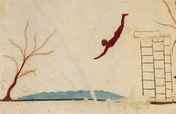
Then Rudolf Steiner made an inexpressibly gentle, gently lowering hand movement with the palm of his hand pointing downwards, several times in a row, again and again lifting the relaxing hand upwards, and then again, stretching to the fingertips rather than stretching it downwards. It was like a leaf that had detached itself from its branch and, as if carried by the air, fell gently to the earth. “That is a D. Learn to experience it as a reaction to a dormant external influence. Practice it out of this mood and with everyone: This through you, turn to another thing in this outside world. You should be caught up in the mood just described and try to express it in the manner of the step."
In the end, Rudolf Steiner told us about a very different kind of oriental educator. He walks quietly next to or behind his pupil, points to everything around him, to stone, plants and animals, mountains and seas, the sky with all its lights and clouds, lets him feel and experience storms and thunderstorms, and the only thing he does is give his pupil the name of all these things. But his name is: the Dada. "And that is also a D. This through you."
Lory Maier Smits from her lessons with Rudolf Steiner, September 1912, GA 277a